Partner Janet Oliphant, Fanny Parker
Queer Places:
4 King St, Dundee DD1 2JB, UK
(1910) The Weisha, Ninewells, Hazel Drive, Dundee, Angus, DD2 1QQ, Scotland
(1913) Argyll Cottage, Liberton Brae & Kirk Brae, Edinburgh EH16 6AJ, UK
(1929) 5 Dsc du Larvotto, 98000 Monaco
Deansgrange Cemetery, 2 Deansgrange Rd, Deansgrange, Blackrock, Co. Dublin A94 D584, Ireland
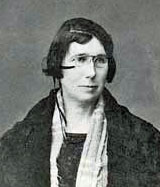 Ethel Agnes Mary Moorhead (August 28, 1869 - March 4, 1955) was born on August 28, 1869, in Maidstone, Kent, into an Irish family with a deep tradition
of medical and military service. The daughter of Brigadier Surgeon George Alexander Moorhead and Margaret Humphreys, she spent her upbringing moving
across various military postings, including Mauritius, before her family settled in Scotland. Her sister Alice was a medical pioneer who founded the
Dundee Women's Hospital, and four of her brothers became doctors. Moorhead pursued an artistic path, studying painting in Paris under Alphonse Mucha and
in James Abbott McNeill Whistler’s studio, the Atelier Carmen, alongside her lifelong companion
Janet Oliphant. Returning to Dundee around 1901, she established a portrait studio with Oliphant at
4 King Street and gained local critical acclaim for her portraiture and landscape works.
Ethel Agnes Mary Moorhead (August 28, 1869 - March 4, 1955) was born on August 28, 1869, in Maidstone, Kent, into an Irish family with a deep tradition
of medical and military service. The daughter of Brigadier Surgeon George Alexander Moorhead and Margaret Humphreys, she spent her upbringing moving
across various military postings, including Mauritius, before her family settled in Scotland. Her sister Alice was a medical pioneer who founded the
Dundee Women's Hospital, and four of her brothers became doctors. Moorhead pursued an artistic path, studying painting in Paris under Alphonse Mucha and
in James Abbott McNeill Whistler’s studio, the Atelier Carmen, alongside her lifelong companion
Janet Oliphant. Returning to Dundee around 1901, she established a portrait studio with Oliphant at
4 King Street and gained local critical acclaim for her portraiture and landscape works.
By 1910, Moorhead channeled her energy into the militant women's suffrage movement, quickly becoming the most prominent suffragette in Scotland. Her
activism began with public protests, such as throwing an egg at Winston Churchill and engaging in tax
resistance, but rapidly escalated into militant direct action. Operating under various aliases, she participated in WSPU window-smashing campaigns in
London, damaged a display case housing a historic sword at the Wallace Monument, whip-lashed a male lecturer who had aggressively ejected women from a
political meeting, and participated in high-profile arson attempts across Scotland.
Moorhead was arrested repeatedly and became the first suffragette in Scotland to be subjected to force-feeding while imprisoned at Calton Jail in
Edinburgh. After being force-fed more than twenty-five times, she contracted double pneumonia and fell dangerously ill, leading to her release under the
Cat and Mouse Act into the care of fellow activist Dr. Grace Cadell. Rather than deterring her, these harrowing prison experiences fueled further action;
upon recovering, she escaped police surveillance in disguise and joined Fanny Parker in a 1914 plot to bomb
Burns Cottage in Alloway. For her extreme endurance during hunger strikes, the WSPU awarded her the prestigious Hunger Strike Medal "for Valour."
Throughout her life, Moorhead maintained close personal, domestic, and political partnerships with other women within the suffrage movement, most
notably her longtime companion and fellow artist Janet Oliphant, as well as campaign partner Fanny Parker. Her deep romantic and collaborative bonds with
women, combined with her lifelong cohabitation, shared artistic practice, and rejection of traditional heteronormative social roles, have led modern
historians and queer scholars to highlight her significant presence within early twentieth-century LGBTQ and women-centered activist history.
Following the outbreak of the First World War, Moorhead collaborated with Fanny Parker to run the Women’s Freedom League National Service Organisation
in London, helping secure war work for women. In the 1920s, she transitioned into the literary Modernist vanguard, moving to France and establishing the
influential arts journal This Quarter alongside poet Ernest Walsh. As editor and patron, Moorhead championed groundbreaking avant-garde literature and
visual arts, publishing foundational works by James Joyce, Ernest Hemingway,
Ezra Pound, Francis Picabia, and
Man Ray. In her later years, she split her time between France, Scotland, and Ireland. Ethel Moorhead died in Dublin
on March 4, 1955. Her legacy as a fierce political rebel, pioneering publisher, and queer cultural icon is commemorated through public street names in
Perth and Dundee, as well as a plaque at her former studio site in Dundee.
Ethel Moorhead is buried at Deans Grange Cemetery in Kill of the Grange, County Dublin, Ireland, in an unmarked grave.
References:
Other references:
- Mary Henderson, Ethel Moorhead (Independently Published, 2020) / Ethel Moorhead, Dundee's Rowdiest Suffragette.
- Leah Leneman, A Guid Cause: The Women's Suffrage Movement in Scotland (Aberdeen University Press, 1991) and The Scottish Suffragettes (NMS Publishing, 2000).
- National Records of Scotland (NRS): Criminal case files and prison correspondence regarding her arrests, trial proceedings, and force-feeding (Files `HH 16/40` and `HH 16/41`).
- Dundee City Archives & Dundee Local Studies Library: Municipal directories, valuation rolls, and Graphic Arts Association records.
- Edinburgh Central Library (Edinburgh Room): Street directories and contemporary local press coverage.
- Ethel Moorhead, Incendiaries (unpublished/private memoir of her suffrage actions).
- Ethel Moorhead et al. (eds.), This Quarter (Vols. 1–4, published 1925–1929).
- Ernest Walsh, Poems & Sonnets (with a memoir by Ethel Moorhead; Harcourt Brace & Co., 1934).
- Robert McAlmon and Kay Boyle, Being Geniuses Together 1920–1930 (Secker & Warburg, 1938).
- Contemporary Scottish and British news coverage from the Dundee Courier, Dundee Advertiser, Evening Telegraph, The Scotsman, Glasgow Herald, and The Suffragette (WSPU organ).
- Dundee Women's Trail: Commemorative site details and biographical summaries.
- National Library of Scotland (Moving Image Archive): Archival resources and biographical film entry (Record 7362).
Support this project
This website is a passion project researched, developed, and funded entirely by me. If you find the content valuable and would like to help support the ongoing research and hosting costs, any contribution is deeply appreciated.
Thank you for keeping this independent resource alive!
My books on Amazon: Elisa Rolle's books
BACK TO HOME PAGE
